

Why this work matters for PRIMA-SAFE
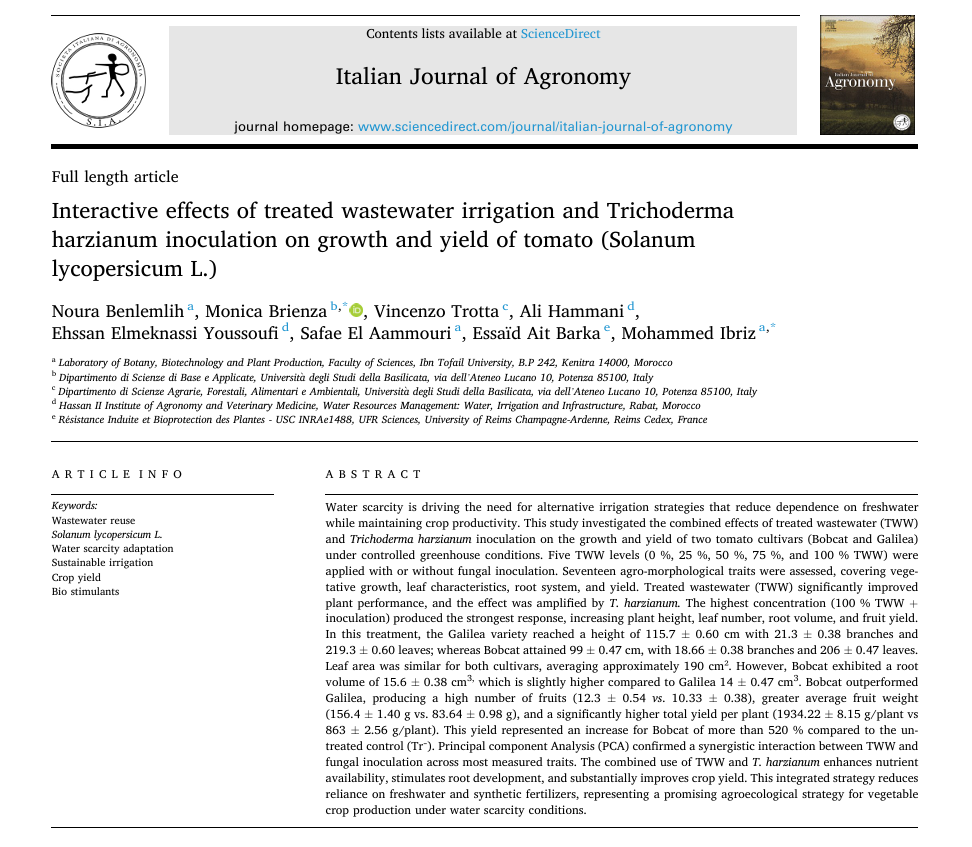
Water scarcity is pushing Mediterranean and semi-arid regions to adopt alternative irrigation sources that reduce dependence on freshwater while keeping horticultural production stable. Within PRIMA-SAFE, safe treated wastewater reuse is not only about having enough water, but also about ensuring that agronomic performance, environmental compatibility, and safety criteria can be met in real farming contexts. This new peer-reviewed study contributes to that goal by testing whether treated wastewater (as an irrigation source and partial nutrient input) can be combined with a biological “biostimulant” strategy to improve plant performance under controlled conditions.
What the researchers tested
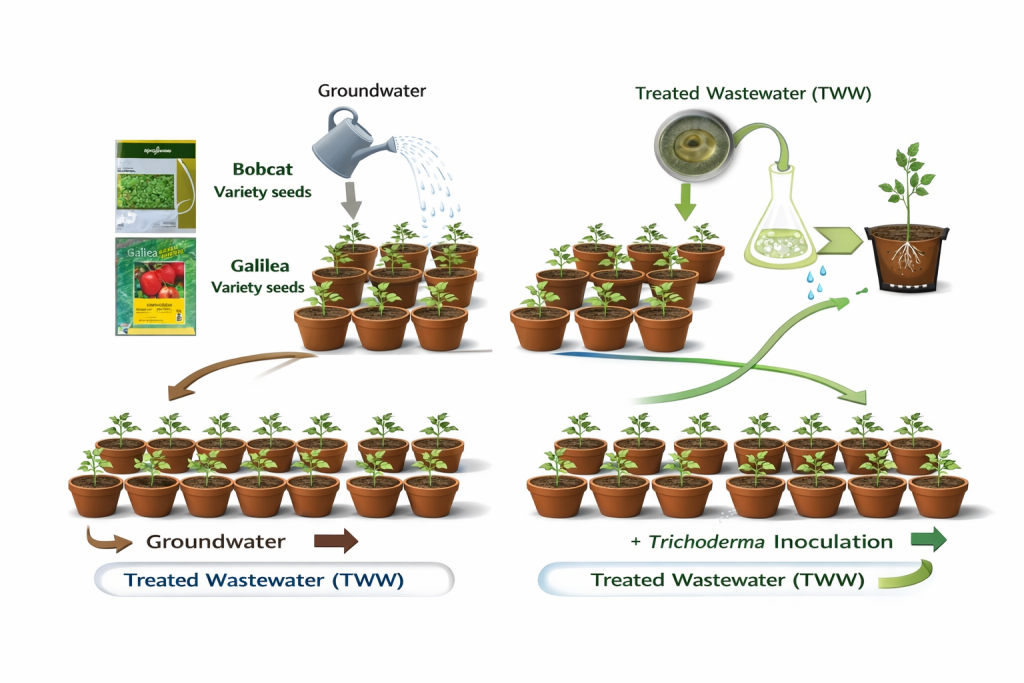
The authors evaluated the interactive effects of treated wastewater (TWW) irrigation and inoculation with the beneficial fungus Trichoderma harzianum on two tomato cultivars (Bobcat and Galilea) grown in a controlled greenhouse environment in Morocco. The experiment applied five irrigation mixtures ranging from 0% to 100% treated wastewater and compared plants with and without fungal inoculation, assessing a broad set of agro-morphological traits covering shoot development, leaf traits, root system responses, and yield components. Importantly, no additional fertilizers were applied during the trial, so the observed responses reflect the combined contribution of TWW (water plus nutrients) and the fungal biostimulant treatment.
Main results
Across both cultivars, increasing the proportion of treated wastewater generally improved vegetative growth and yield, and these benefits were amplified when plants were inoculated with T. harzianum. The strongest overall performance occurred with the highest wastewater level combined with inoculation, where the authors report clear increases in plant height, leaf number, root volume, and fruit production metrics. The two cultivars responded differently in how growth translated into yield: under the highest TWW plus inoculation condition, Galilea achieved higher shoot development indicators (e.g., height and leaf number), while Bobcat delivered higher yield performance through a greater number of fruits, larger average fruit weight, and a substantially higher total yield per plant. Multivariate analyses (PCA and clustering) supported the interpretation of a synergistic interaction between treated wastewater and fungal inoculation across most measured traits.
What the water quality data add to the message
The paper also provides context on the treated wastewater used, showing that it had higher electrical conductivity and sodium-related indicators than groundwater, which signals a potential salinity-management challenge, but it was also enriched in macronutrients such as potassium and calcium. The authors compare measured microbiological parameters and heavy metals against Moroccan irrigation standards and report they were below permissible limits for irrigation of food crops in their dataset, reinforcing PRIMA-SAFE’s central theme that reuse performance must be discussed alongside water quality compliance and monitoring requirements. At the same time, the authors note that nutrient inputs from TWW can contribute to fertilization but are not necessarily sufficient to fully replace conventional fertilisers, which is relevant when designing realistic reuse strategies for growers.
Why this is relevant to PRIMA-SAFE’s mission
From a PRIMA-SAFE perspective, this publication is valuable because it frames treated wastewater reuse as a combined agronomic and management strategy rather than a single-variable substitution of freshwater. The results support the idea that coupling reuse water with microbial biostimulants can enhance resource-use efficiency and productivity, potentially reducing reliance on freshwater and lowering synthetic fertilizer demand, while still emphasizing the need for consistent monitoring of key parameters such as salinity and compliance indicators over time. The study also clearly states the next steps needed for practical deployment, including field validation across seasons and zones, broader food-quality assessments, and economic evaluation to understand adoption feasibility beyond greenhouse conditions.